What Can Really Be Accomplished in 8–10 Hours of Design Time?
More than most people expect.
One of the most common questions I hear from clients before we begin is:
“What can actually get done in just a few hours?”
It’s a fair question. On the surface, 8–10 hours doesn’t sound like much when you’re thinking about designing an entire home. But what many people don’t realize is that interior design—when done thoughtfully and efficiently, isn’t just about time spent. It’s about clarity, direction, and intentional decision-making. And in the right hands, a lot can happen in a short amount of time.
Design with Intention, Not Excess
When I begin working with a client, the goal isn’t to endlessly explore options—it’s to refine quickly and thoughtfully.
With a clear understanding of your style, your space, and how you want your home to feel, I’m able to make decisions efficiently and with purpose. This allows us to move through the design process in a way that feels streamlined rather than overwhelming.
What This Can Look Like in Real Time
In as little as 8–10 hours, I’ve been able to help clients make significant progress—sometimes even shaping the direction of an entire home. For example, within that timeframe, I’ve:
Sourced furniture for an entire home
Booked showroom appointments for in-person selections
Created visual renderings to bring the design to life
Developed mood boards that establish a cohesive palette
Presented options for lighting, window treatments, and wallpaper
Helped clients feel confident and clear about their next steps
Design Happens in Layers
While we may dedicate focused blocks of time—like an 1–2 hour design session—great design doesn’t happen all at once, it can’t.
It happens in layers
There are moments of sourcing, moments of refinement, moments of revisiting decisions, and moments of ensuring everything works together seamlessly. Often, the most important progress happens in the in-between—when ideas are being thoughtfully developed and curated behind the scenes.
This is what allows a home to feel cohesive rather than rushed. It’s not just about how many hours are spent in one sitting—it’s about how those hours are used over time to guide the process with intention.
The Clients Who Get the Most Out of It
I’ve also found that the most successful projects are often the most collaborative ones. Clients who are engaged in the process—who share their preferences, provide feedback, and stay involved in the decision-making—tend to get the most out of their design experience.
Not because they’re doing more work, but because the process becomes more refined, more aligned, and ultimately more personal. Design works best when it feels like a partnership.
Why This Matters
For many homeowners, the hardest part of design isn’t finding options—it’s knowing which ones are right. That’s where focused design time becomes incredibly valuable. Instead of spending weeks (or months) second-guessing decisions, you walk away with:
A clear vision
A cohesive plan
Thoughtfully selected options
Confidence in how everything will come together
A Thoughtful, Efficient Approach
At Collins & Co. Calm Collected Interiors, I believe design doesn’t need to be overwhelming to be impactful.
With the right approach, even a limited number of hours can create meaningful progress and set the foundation for a home that feels calm, cohesive, and beautifully collected.
A Starting Point That Moves You Forward
Whether you’re designing one room or an entire home, sometimes all you need is a focused block of time to bring everything into alignment.
Because it’s not about how long the process takes.
It’s about how intentionally it’s done.
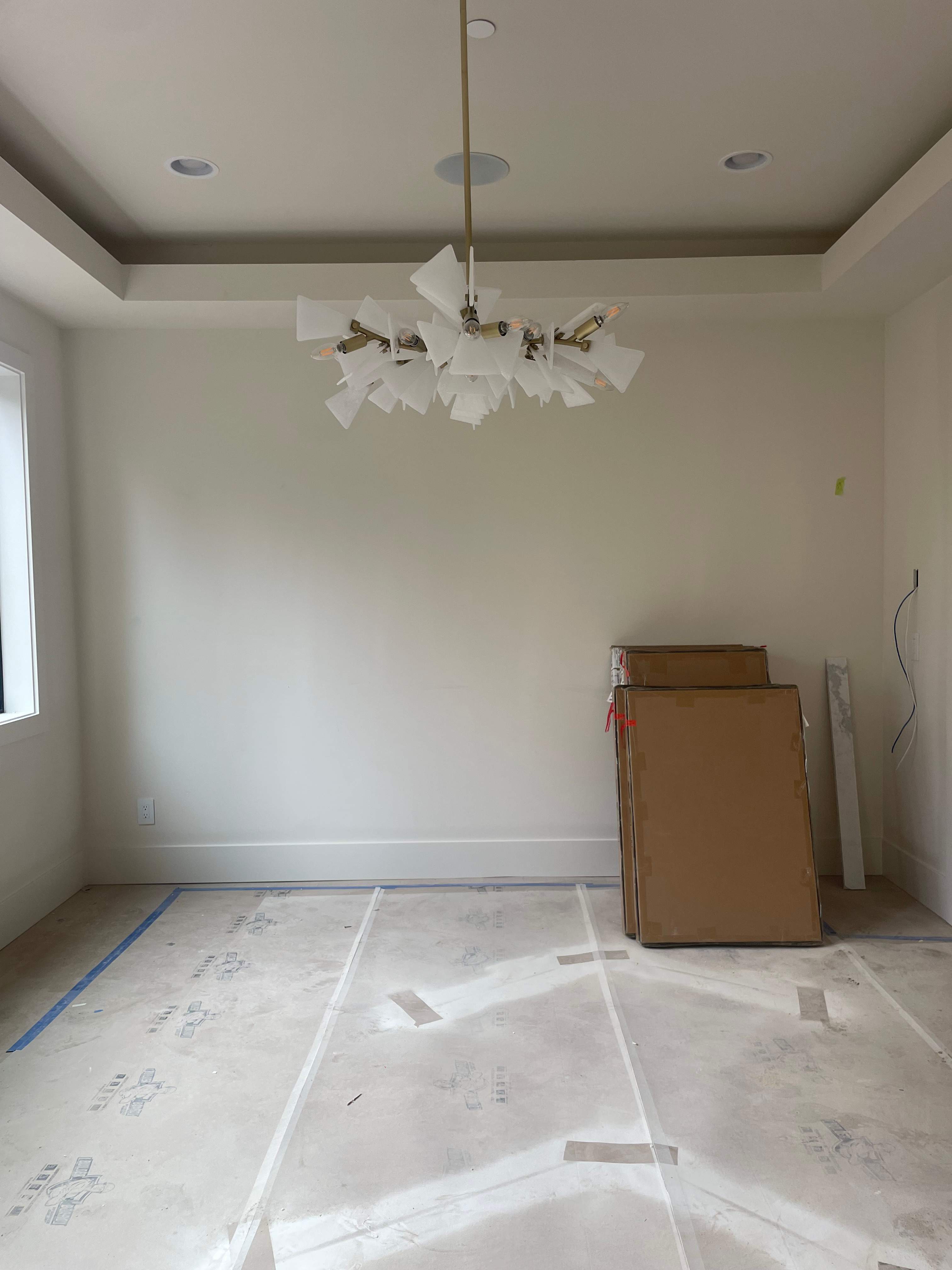
BEFORE:
This dining room had beautiful bones, but initially lacked depth, warmth, and visual interest. The walls were bare, leaving the space feeling incomplete and undefined.
Within a focused 15 hours of design time, we thoughtfully curated the direction for the room—selecting the chandelier, sourcing wallpaper, and refining furnishings that would bring cohesion and character to the space..
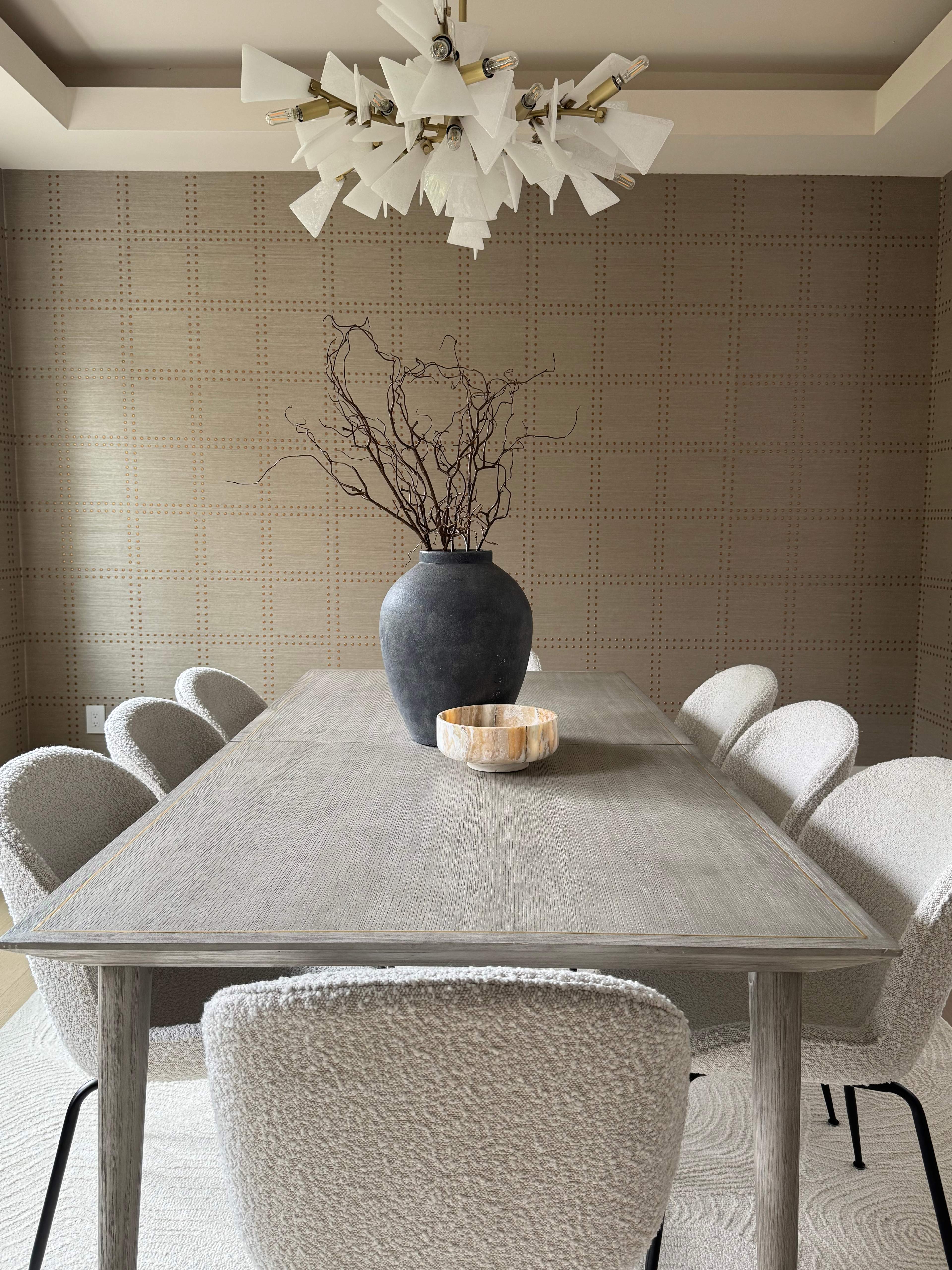
AFTER:
This dining room truly came to life through thoughtful layering and material selection. The grasscloth wallpaper with rivet detailing introduced both texture and structure, grounding the space while adding a sense of quiet luxury.
With the addition of the dining table and chairs, the room shifted from feeling undefined to fully realized—no longer just a pass-through space, but one that feels intentional, inviting, and ready to be lived in.
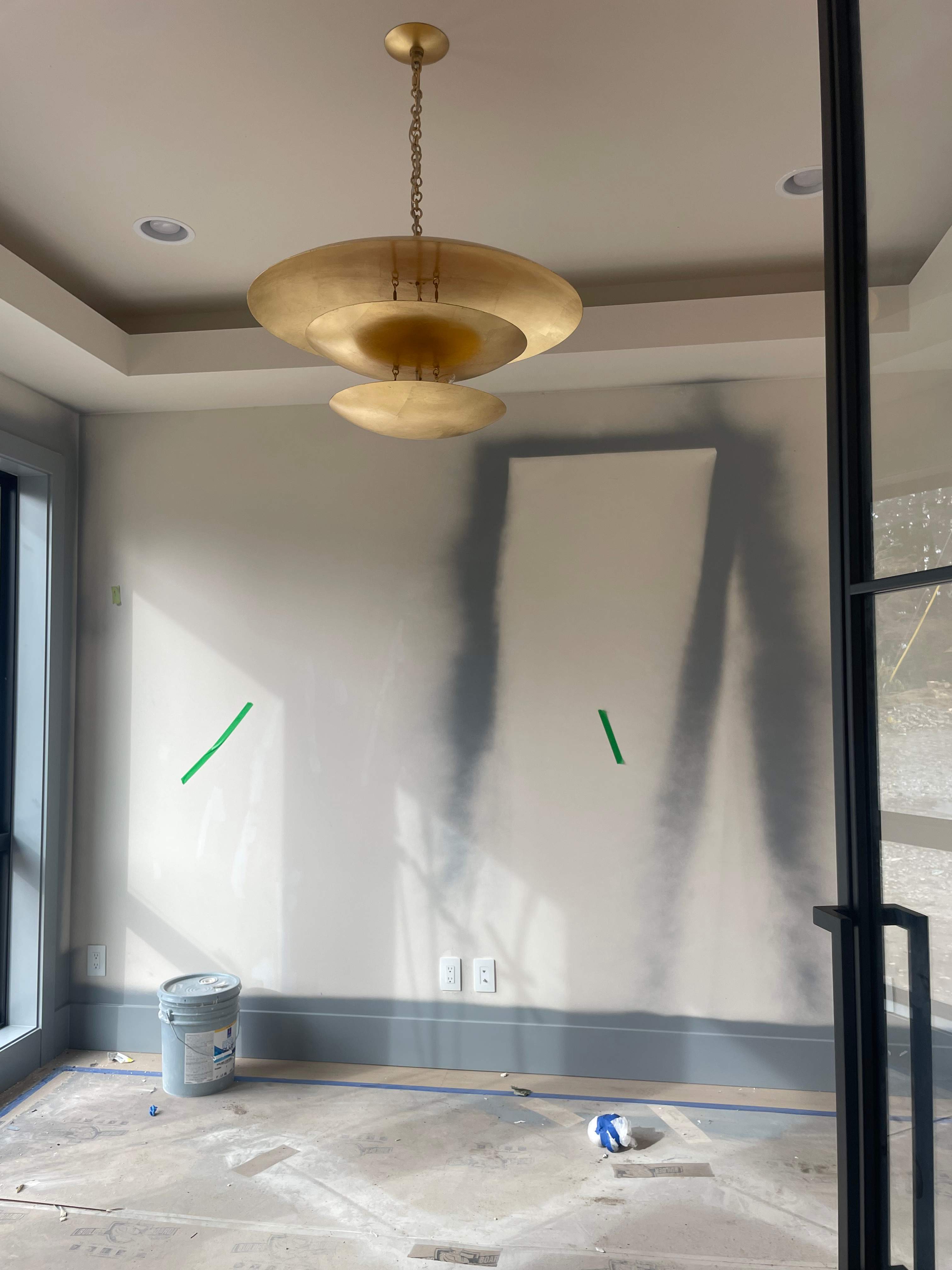
BEFORE:
This office was part of a newly built home that, once the staging was removed, felt clean but lacked character and depth. It was a blank canvas.
From the beginning, the goal was to create a space that felt more dramatic and intentional. The client was drawn to a soft gray-blue palette, which became the foundation for a color-drenched approach—setting the tone for a room that would feel both moody and refined.
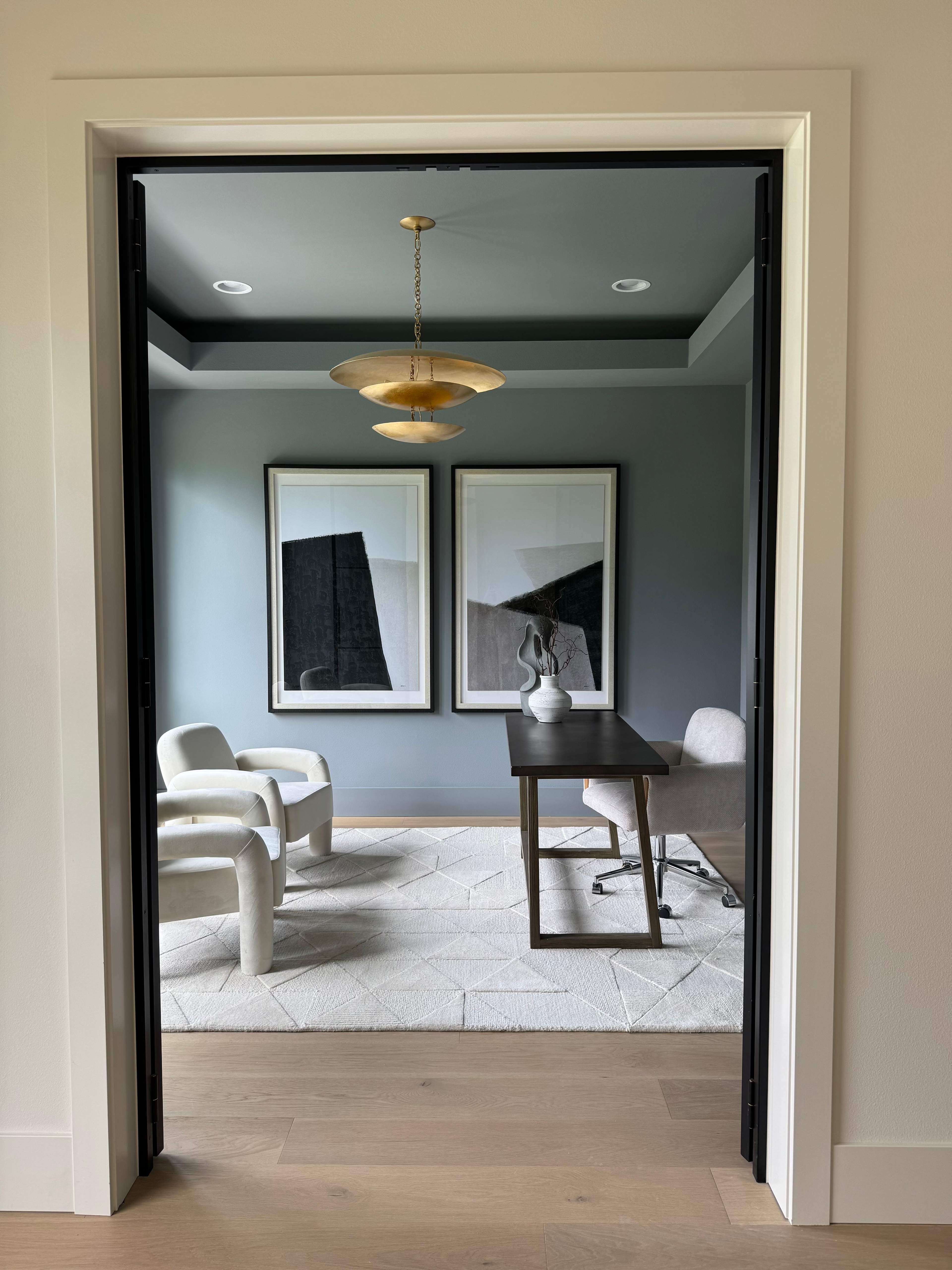
AFTER:
In the final space, you can see how beautifully the brass pendant interacts with the blue-toned walls, adding just the right amount of warmth and contrast. It introduces a subtle touch of glamour without overpowering the room.
The furnishings, artwork, and accessories were thoughtfully sourced to feel light, playful, and layered—bringing balance to the deeper wall color and creating a space that feels both inspiring and personal.